VYNE+ Music Edition
Choose a sound, duration, base and label — and we age a single bottle of sparkling wine to it. Four steps. One bottle. None like it.
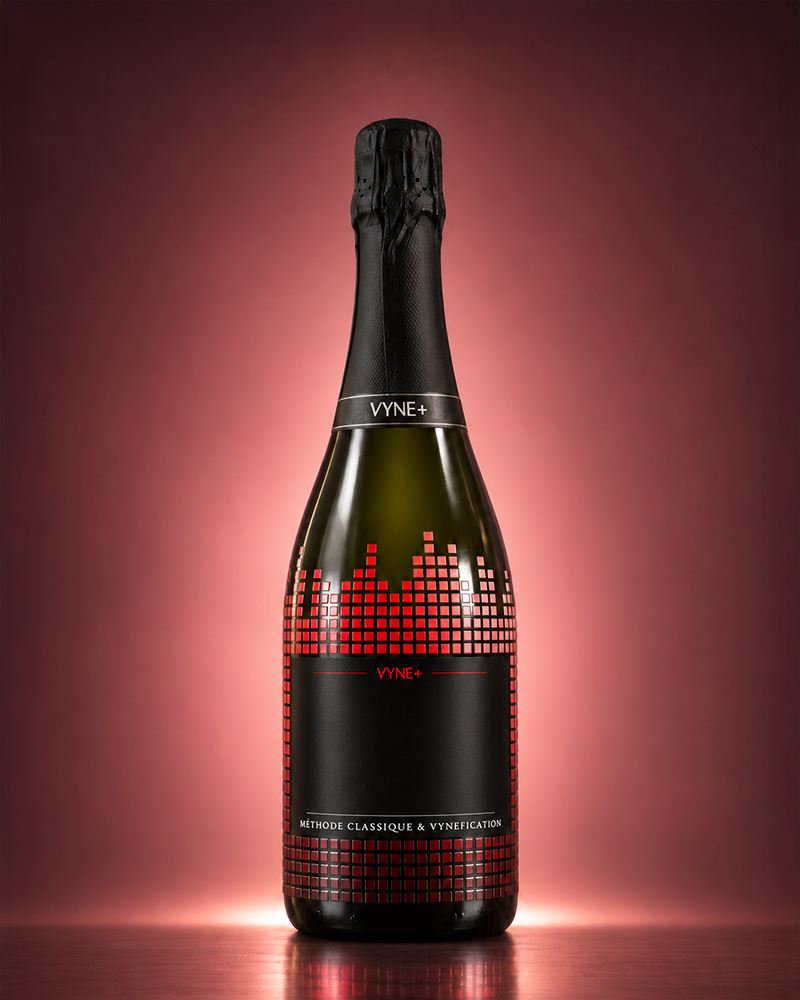
Your bottle, aged to a sound
Tap to begin · 4 simple steps
Your bottle, ready
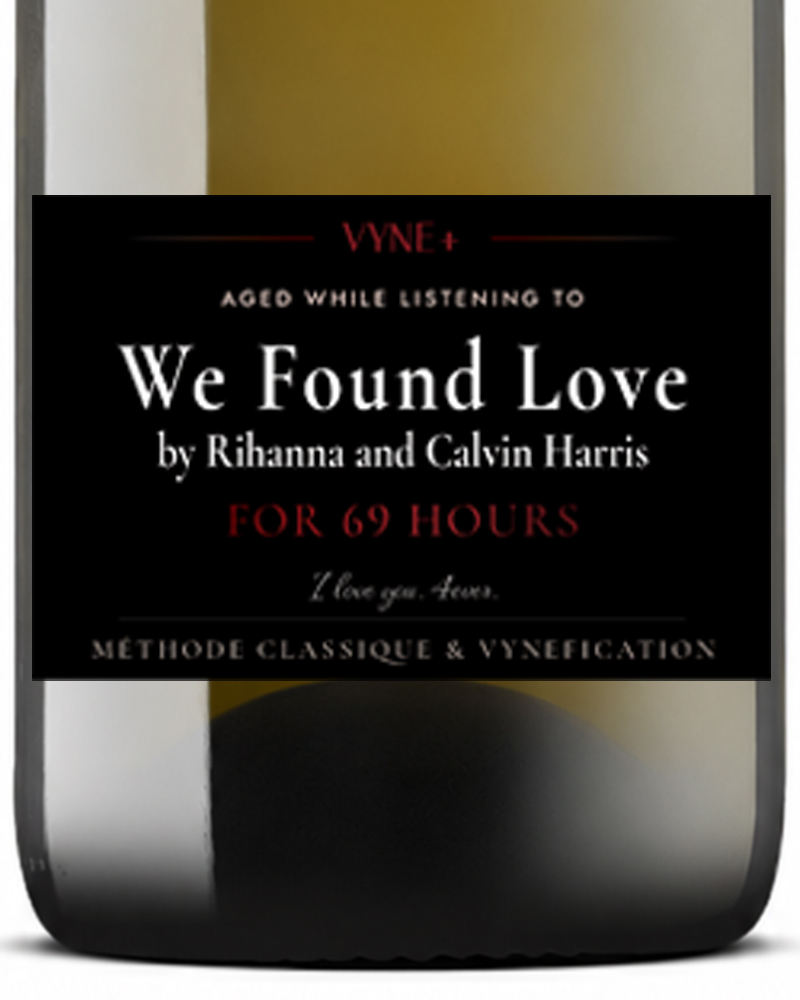
Opened, poured, remembered
Frequently asked
The questions we get most often — about the wine, the sound, the shipping, the science.
How does sound actually change the wine?
Sound is transferred into the wine as controlled mechanical vibration during ageing. Over time, these vibrations can influence processes linked with aroma development and texture. Same wine, same winemaking, different sound, a distinctly different bottle.
What wines does VYNE+ use?
We use premium wines from Klet Brda in Slovenia. Music Editions are made with traditional-method sparkling wine that has completed secondary fermentation in the bottle and aged on lees for at least 18 months before its individual sound treatment begins.
What music can I choose?
Choose a track from the VYNE+ sound library or request another song you have the right to use. You can upload an audio file or share a link to help us identify the recording. We’ll contact you if we need a different file or proof of permission.
How long until my bottle arrives?
Your Music Edition is dispatched once the selected sound treatment and all final production stages are complete. In Step 2, you’ll see the latest date by which you can expect to receive your bottle. We plan ahead to make sure it arrives in time for important occasions such as Christmas or Valentine’s Day.
Where do you ship, and what does delivery cost?
We currently ship across the EU. Delivery is included with Music Edition bottles. For destinations outside the EU, contact us at info@vyneplus.com before ordering.
Is this a gimmick or is there real science here?
We understand the scepticism. Sound is physical vibration, and our technology transfers it directly into the wine. In controlled trials, wines made from the same grapes under matched cellar conditions were compared with silent controls. Independent analysis found measurable differences in aroma compounds and yeast-derived structural markers. Explore the technology, testing and results in How It Works.